

Response to: Leadership Lab with Jeffrey Goldberg “When Trust Isn’t Enough”
By Saaraim Nunez ’27, Washington and Lee University
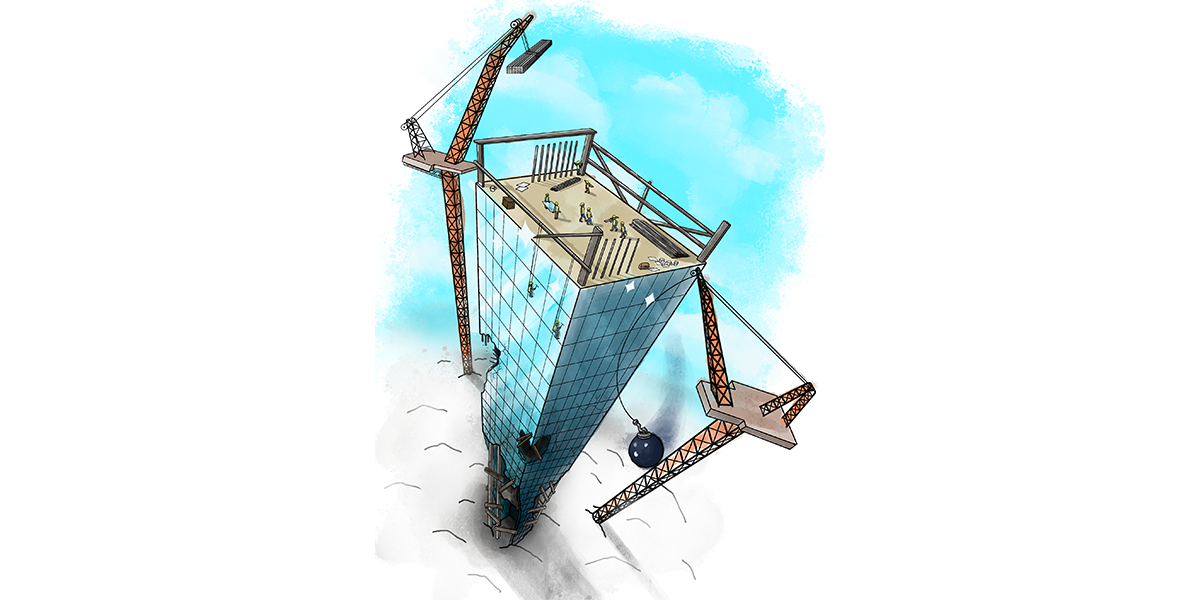
Cover Art Credit: Colin Bridges ’26, Washington and Lee University
- About the Mudd Center
- People
- Programs and Events
- Leadership Lab
-
Mudd Undergraduate Journal of Ethics
-
Volume 11: Spring 2026
- Editorial Board
- Letter from the Editor
- Journal AI Policy
- Cover Art Statement
- Do the environmental costs of AI data centers justify construction moratoria?
- Holistic Affirmative Action
- Fair Allocation of Scarce Resources in a Pandemic: Benefit, Reciprocity, Equality, and the Limits of Brudney’s “Principle”
- Just Around the Mountain Bend
- How Old I Have Become
- Leadership Lab with Mike Luttig and Lewis Powell III "When Morals Breach Party Lines"
- Leadership Lab with Jeffrey Goldberg "When Trust Isn’t Enough"
- Daphne Miller "A More Modest Proposal (Plant Based)"
- Volume 10: Spring 2025
- Volume 9: Spring 2024
- Volume 8: Spring 2023
- Volume 7: Spring 2022
- Volume 6: Spring 2021
- Volume 5: Spring 2020
- Volume 4: Spring 2019
- Volume 3: Spring 2018
- Volume 2: Spring 2017
- Volume 1: Spring 2016
-
Volume 11: Spring 2026
- Annual Reports
- Mudd Center Fellows Program
- Get Involved
It is not every day that a journalist finds himself inside a situation that raises the very ethical questions he is meant to report on. For Jeffrey Goldberg, that is exactly what happened, and it is how he chose to begin his conversation at Washington and Lee University on March 17, 2026. The Leadership Lab event (titled Journalism, Ethics and Leadership in the Modern Age), hosted by the Roger Mudd Center for Ethics, featured a conversation between Goldberg and NPR media critic and Professor Eric Deggans. Goldberg, the editor-in-chief of The Atlantic, recalled being accidentally added to a private Signal group chat that included high-profile political figures such as Vice President JD Vance and Defense Secretary Pete Hegseth. What sounds like a bizarre mistake that could have jeopardized national security has been labeled by the public and media as “Signalgate.” The situation wasn’t unusual because it involved a mistaken message, but because the discussion centered on sensitive war strategy, including deliberations surrounding a secret military strike in Yemen. Unexpectedly, Goldberg was given access to confidential planning at the highest level of government, placing him in a position where he had to consider what responsibility he held to the public (to tell the truth) and what responsibility he held to national security (to protect his country).
After his anecdotal opening, Deggans shifted the conversation to a broader (and lingering) question: what is journalism supposed to do now, given how different the information environment feels? More than once, Goldberg returned to the idea that journalism is not just about presenting opposing views and letting readers sort it out. If one side of a claim is backed by evidence and the other is not, presenting them as if they are equally credible is disingenuous and wrong. Further, Goldberg spent time speaking about trust. He recognized that people are skeptical of media institutions, and that, reporting changes as new information is revealed. What seemed to concern him most, however, was how quickly individuals’ skepticism can turn into something more absolute. There comes a point where people stop engaging with news reporting altogether, making it difficult to agree even on basic facts. If journalism cannot anchor itself on facts, what is it supposed to ground itself on?
I found his argument convincing. But I keep coming back to something that doesn’t fully sit right. Goldberg emphasized what he described as an “American journalist.” Journalism should not be driven by the desire to be the first to break a story, especially in cases involving sensitive information relevant to national security. It comes down to judgement and what might happen next. An “American journalist” has to think about whether sharing something might cause harm—even if the information being shared is true. But I’m not sure the problem he points to can be fixed by improving journalism alone. People often decide what they trust before they even read something. Our current political climate—polarized, vindictive, backstabbing, and, to many, corrupt—influences what people trust before they read something. Rhetoric from politicians pushes people to (blindly) trust or distrust a source before they read it. In moments of introspection, I must admit that I, too, am guilty of this. I might scroll past something because of where it comes from (or who produces it), not because I took the time to read it. Unfortunately, once that pattern sets in, it’s hard to undo. Journalism can improve. But I’m not convinced that this possibility alone accounts for the reader’s preconceived notions—one can only hope. Goldberg focuses on what journalism should look like, but he also considers something else: journalists sometimes end up having to make tough calls between informing the public and thinking through the consequences for national security. This does not take away from his argument, but it changes how I see the problem, especially since it depends on the individual’s freedom of conscience. The real issue, then, may lie in how people decide what to believe.
Goldberg’s opening anecdote shows a different conflict. Being placed inside a conversation with government officials about war changed his role as a journalist. It put him at the center of a real ethical dilemma. A journalist has to choose: telling the public what’s happening and not causing harm to his country. The lesson, then, might be deciding what to do with the truth once you have it before you.
The views, opinions, and conclusions expressed in student‑authored works published [in this journal / on this website] are those of their respective authors and do not necessarily reflect the official policy, position, or views of Washington and Lee University or the Mudd Center or its administrators, faculty, or staff.
- About the Mudd Center
- People
- Programs and Events
- Leadership Lab
-
Mudd Undergraduate Journal of Ethics
-
Volume 11: Spring 2026
- Editorial Board
- Letter from the Editor
- Journal AI Policy
- Cover Art Statement
- Do the environmental costs of AI data centers justify construction moratoria?
- Holistic Affirmative Action
- Fair Allocation of Scarce Resources in a Pandemic: Benefit, Reciprocity, Equality, and the Limits of Brudney’s “Principle”
- Just Around the Mountain Bend
- How Old I Have Become
- Leadership Lab with Mike Luttig and Lewis Powell III "When Morals Breach Party Lines"
- Leadership Lab with Jeffrey Goldberg "When Trust Isn’t Enough"
- Daphne Miller "A More Modest Proposal (Plant Based)"
- Volume 10: Spring 2025
- Volume 9: Spring 2024
- Volume 8: Spring 2023
- Volume 7: Spring 2022
- Volume 6: Spring 2021
- Volume 5: Spring 2020
- Volume 4: Spring 2019
- Volume 3: Spring 2018
- Volume 2: Spring 2017
- Volume 1: Spring 2016
-
Volume 11: Spring 2026
- Annual Reports
- Mudd Center Fellows Program
- Get Involved
The Mudd Center
-
Washington and Lee University
209 Mattingly House
Lexington, VA 24450