
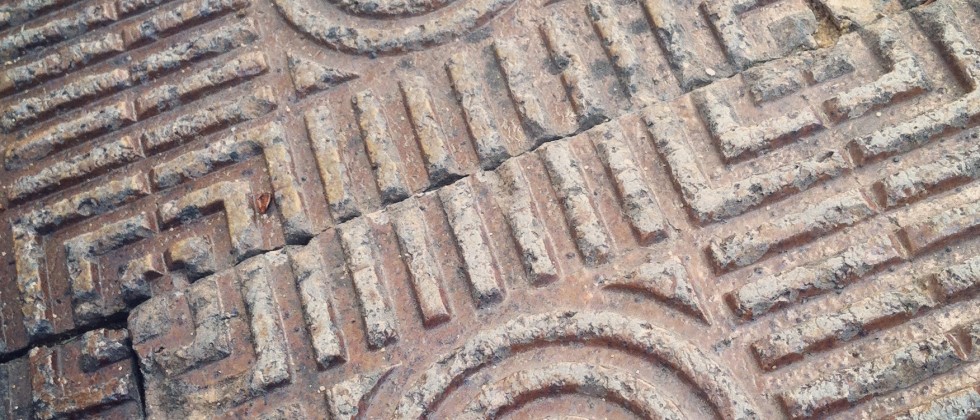
How Old I Have Become
By Diana Gaffner ’29, Tufts University
Cover Art Credit: Colin Bridges ’26, Washington and Lee University
- About the Mudd Center
- People
- Programs and Events
- Leadership Lab
-
Mudd Undergraduate Journal of Ethics
-
Volume 11: Spring 2026
- Editorial Board
- Letter from the Editor
- Journal AI Policy
- Cover Art Statement
- Do the environmental costs of AI data centers justify construction moratoria?
- Holistic Affirmative Action
- Fair Allocation of Scarce Resources in a Pandemic: Benefit, Reciprocity, Equality, and the Limits of Brudney’s “Principle”
- Just Around the Mountain Bend
- How Old I Have Become
- Leadership Lab with Mike Luttig and Lewis Powell III "When Morals Breach Party Lines"
- Leadership Lab with Jeffrey Goldberg "When Trust Isn’t Enough"
- Daphne Miller "A More Modest Proposal (Plant Based)"
- Volume 10: Spring 2025
- Volume 9: Spring 2024
- Volume 8: Spring 2023
- Volume 7: Spring 2022
- Volume 6: Spring 2021
- Volume 5: Spring 2020
- Volume 4: Spring 2019
- Volume 3: Spring 2018
- Volume 2: Spring 2017
- Volume 1: Spring 2016
-
Volume 11: Spring 2026
- Annual Reports
- Mudd Center Fellows Program
- Get Involved
I was home once, when I stuck out my small foot to the nearest rock. My hands were under me, bracing my younger body from collapsing into the river current. My little brother had already given into the water’s call. He stood there, slapping his hands together gleefully as the water splashed in every direction. I focused on my toes, coming into contact with the cold surface of the stepping stone. I shifted my weight, trying to walk as far out into the river as I possibly could. There was a moment when I thought I might make it, but there was little to no traction between my smooth feet and the slick rock. I tumbled into the water in a mess of my sprawling limbs. The river was never so shallow that I would gash my knees on the bottom, but never so deep that I might drown. It was kind to me, and we always played. I walked along its pebbled bottom, shivering all the way, to splash around with my brother until it got too cold. We were always met with towels and shoes, laid out side by side to bake in the dry sun.
The Colorado River flows through the west. It starts upstream of me in Colorado, building in size as the thin stream carves its way into the forgiving land. I never saw its meager beginnings. I only ever saw the Colorado River as a giant force of nature, overflowing and chomping at the bit. It always came to greet us out in the mountains of Colorado. It was for me to fall into in the summertime, and for the ice to freeze over in the wintertime. It was for my grandfather to teach my father to fish, and it was for the annual rubber duck race where my brother and I cheered on our very own duck as it rushed down the stream. It carries the memories of all those who once relied on it as a resource, who lived on its banks, who rely on it in the present day. Following the stray rubber duck downstream, people from Colorado, Utah, Wyoming, California, New Mexico, Nevada, and Arizona all source water from the Colorado River. I remember the rafting down the river as it drifted off into Utah. The red clay canyons tower over the river like scorched, fiery land. It is an entirely different world of red sand and slotted canyons. The river steals the clay as it rushes, turning itself muddy and darkened with sediment. The waters reach the Glen Canyon Dam. Here, human influence is unmissable. The water rams into the towering wall with a crash, crawling up its sides. Its fighting energy is only converted into hydroelectricity as it tumbles through turbines, powering generators, powering electric cities. Only some of the water is allowed to continue flowing, and the sediments of clay and sand build-up on the upstream side of the wall, unable to pass through. After that, there’s the Hoover Dam, the Davis Dam, the Parker Dam, the Headgate Rock Dam, the Palo Verde Dam, the Imperial Dam, the Morelos Dam, and countless offshoots of diverted bends. Each redirection of the river towards human needs diminishes the river’s flow rate and its width. Each redirection sends the Colorado River to its premature end, dying in obscurity in vast desert sands miles before the Gulf of California. There is not enough water in the Colorado River to fill every plastic water bottle, power every home, or irrigate every agricultural field. Meanwhile, the heat beats onto the surfaces of every reservoir, evaporating away the vast lakes. It beats hotter, the sun pounding on the too-dry banks of cracked dirt as the temperatures rise. The river levels plummet. Yet, everyone keeps taking and taking from the dwindling supply. Greedily, we drink the water, only realizing that we have reached the last sip when the river itself has gone.
If you grew up in the West, it is likely that the Colorado River flowed through your life as well. I invite memories of rafting trips, fishing expeditions, skipping rocks, and splashing. If you can remember your river, biting and jumping at the edges of its banks, alive with the fast-paced water, then it is most surprising when there is no water left to lap at the land.
The banks I return yearly to are etched in my mind. I see the impossible stepping stones that used to be slippery from the high tides. I see the water crawling higher and higher onto the shore as it tries to claim my dry, tattered shoes for itself. You can walk across the river without getting your feet wet now. Lunge from bare rock to bare rock. You don’t even need to take your shoes off. “There is water in my river!” I claim as I implore the passerbys and tourists to partake in the same beauty that I had the privilege of witnessing. But when I return, the scene never matches the one in my memory. The ecosystem has dispersed to the winds, and I can almost see each of the willows, who used to drink the water greedily, march somberly along to a new bank. They leave footprints on their way out.
The Colorado River once emptied into the Gulf of California. Now it does not reach such lengths. If you follow the water, it ends with a trickle, leading nowhere but its own terminal point. Can you understand that once people played in this trickle of water? Can you understand that once this river did not dissipate into dry sands? It used to mold its path all the way to the Gulf. Once, this too was a place for kayaks and fishermen and skipping rocks and splashing children. Every year, a homecoming to a place that no longer exists. How to describe that this dry land was once a river that one could come home to? I will describe the lively waters of my youth, but there is simply no way to equate the flat, slow moving river with the one in my memory. The death of a homecoming arrives when suddenly, there is no way back to the place that was always a constant. It is turning your back for a moment before realizing that this plague has gotten you too. Climate change does not exempt any person from its impacts. Caring about any natural place risks caring about a place that might be gone tomorrow. Caring about any natural place means trying desperately to tell the younger children about your childhood, saying, “I used to play in the river that runs just over there!” But no such river runs anymore. I have an incommunicable tie to my nesting place, which I try to return to yearly but cannot. I cannot remember the last time I fell into the river’s rushing waters before they quelled into a dull flow. I wish I knew that the last time I played there would be the last time. Every time I return, I expect to be swept away by the overflowing river banks. No matter how many times I see the depleting water source, I will always hold the overflowing past as the truth, and the present as a cruel joke that cannot possibly be true until my eyes again see reality. I am an unreliable narrator along with all of the people who remember the way things once were.
Yet, I am only eighteen years old. I am not remembering a land far away in time. Every change is happening so unimaginably quickly. Mountains are deconstructed, their tops blown off just to mine molybdenum from the hidden veins of earth that run too deep for humans to slit from the surface. The debris falls into the rivers, carried from exploited vein to exploited vein. Where the mountains once towered is now industry, the local businesses are supplanted by massive corporations, and the land becomes unrecognizable. The reminiscing of “the good old days” has historically been a state of mind reserved for the elderly. But here I am, reminiscing on my fading memories of a river that no longer runs. How old I have become! When I speak with my grandparents, they hand me stories and memories of their old friends. They acknowledge their inevitable deaths, and they speak with resignation about the knowledge that their dearest friends will pass on. How old I have gotten to witness my friend, the river, die. How old I have gotten to be the holder of an ancient wisdom of a land where there was once a river. How old I have gotten to watch everything I know be swept away in the name of progress. What will the new generation place in the abandoned path of the river? Will it be a sewage pipe? Will it be torn away to build a factory? Or an electronic server? I feel myself aged unusually, watching landscapes fade away in years whereas they used to fade in lifetimes.
I remember making fun of my grandparents. They appeared so ignorant to the cellphone I grew up with. They didn’t know which icons to click on or what numbers to press. I figured them foolish and unwilling to adapt to the brilliance of modern culture. The cultural narrative of the elderly paints them as stuck in their time. Dinosaurs. Obsolete. The rhetoric towards the elderly paints them as lesser evolved humans. Society has carefully dehumanized the elderly to the point where us young people discount their remembrance of the way things used to be as a symptom of old age. The advocates of reckless progress justify the killing of the elders’ dear friends, like my dear friend the river, because it is a friend of a senile old fellow. It is not the friend of modernity, the friend of progress, or the friend of innovation. In fact, those who call for the death of the river label the memory of the way things used to be as the enemy. The reminder that things could be different is a villainous offense of morality. When did the eighteen year olds get to be elderly? When did our memories of childhood become the decrepit misremembrances of the forgetful? The forgetful, because we forget that we are meant to adhere strictly to modern movement and abandon the memory of how the river danced along its banks.
It is safer to forget. Forgetting means not having to feel the grief of watching everything change. But it also means forgetting all of the good memories too. I don’t ever want to forget my river, no matter how much it hurts to watch it fade. I want to care deeply and remember how to love when the constant onslaught of pessimism invites apathy. It has done me good to love my river, as I now have the memory of a younger me in a younger river, laughing at the water’s babbles. I have the memory of my brother and I laughing in the water, when we still played together. It might hurt to care, but it brings meaning to every memory. I cannot imagine living life in perfect nonchalance, going about each day with uncaring, glazed eyes. What would that be worth?
It seems to have become rare to be vulnerable enough to love the world. The few people who listen to our rambling river stories do it to appease us. They are friends, family, children who don’t want to cause a stir by arguing. They stare blankly and nod at the right times. They are bored by the simplicity of this nature. They are bored because I am pleading with them to turn their focus backwards in time, and they have learned that the only useful direction is forward. Utility is drilled into the minds of the masses, an oily deposit that oozes darkness on top of all the beautiful things in the world. The oil spills into the river, and the river is better blackened because it represents innovation with its chokehold on society. The society is happy to be choked. In this version of the world, time ought to only move forward. It is neither essential nor efficient to dwell on the river that used to run through this dried-up ravine. But forward has never been the only direction of time. It has looped and curved, jumped and stalled, slowed and quickened. It has been circular, repetitive, backwards, and forwards. Yet this obsession with the forward arrow of time, a rigid timeline towards an unknown bullseye, looms over every attempt to stand still and appreciate the present, the times before us, and the times that could have been. Not only have we killed the home which we were meant to return to, but we have killed the idea of returning home. We have slaughtered the desire to go backwards in any sense of the word. Home is seen as a restrictive barrier to the rest of the world and all the opportunities it may offer. Home is something to get away from. The hero can only have their journey if they leave home behind.
The past offers magnitudes. The river offers magnitudes. But it has been locked away as a relic of an older generation. I am not old, and I still retain my memories perfectly well. To me, this winding dry land that once ushered water is not an absence of possibility or beauty. This is still where I played as a child. It just looks different. My affection for this river is not diminished by the absence of the river. But I would be remiss to live in my happiest memories of play and naïveté and ignore that the times are, in fact, changing. I am not blind to the changes the world is going through. Neither am I resistant to change. I understand that the natural state of the world is entropy. That is, scientifically, the idea that everything in the world will grow to be more and more disordered, random, and dispersed. This systematic falling apart has been written into the books of fate, and it will continue happening, and I will continue watching it. Watching things fall apart contains its own special beauty. The way water falls when it abandons the land beneath it, the way brown leaves sever themselves from the tree, the way the fire slowly creeps with licking flames through the dry wooded forest. These things are all beautiful in their own rights, but there is no reason to accelerate the arrow of time by drying up the lands by rerouting and damming every river we can see. Because if we adhere to the forward-thinking that rules our world, then there is no way to go back. There is no way to put the water back onto the land it fell from, no way to place the fallen leaves back on their branches, and no way to simply undo the fires that ravaged the forests. The decisions we make to resign the past into oblivion cannot be undone as we tumble faster and faster towards our fate of disorder. But maybe we can try to remember, and maybe we can still return the river to its bygone path. If we deconstruct the dams and cut off the offshoots in the violent act of benevolent destruction, you might be able to see the river the way it once flowed. Then again, it might already be too late.
And so I wonder why we could not have just taken a moment longer to gaze at the meandering river? Why could we not have taken a moment to stand still, to watch it wind and twist for no other purpose than to wind and twist in its age-old path? Now this place of homecoming has passed, and we have killed it and tried to bury it. But I know that someone will see its well beaten path, imprinted into the land, and they will ask, “What is that?” And I hope someone will tell them of the river that once ran, the fish that once jumped, and the children that once played.
The views, opinions, and conclusions expressed in student‑authored works published [in this journal / on this website] are those of their respective authors and do not necessarily reflect the official policy, position, or views of Washington and Lee University or the Mudd Center or its administrators, faculty, or staff.
- About the Mudd Center
- People
- Programs and Events
- Leadership Lab
-
Mudd Undergraduate Journal of Ethics
-
Volume 11: Spring 2026
- Editorial Board
- Letter from the Editor
- Journal AI Policy
- Cover Art Statement
- Do the environmental costs of AI data centers justify construction moratoria?
- Holistic Affirmative Action
- Fair Allocation of Scarce Resources in a Pandemic: Benefit, Reciprocity, Equality, and the Limits of Brudney’s “Principle”
- Just Around the Mountain Bend
- How Old I Have Become
- Leadership Lab with Mike Luttig and Lewis Powell III "When Morals Breach Party Lines"
- Leadership Lab with Jeffrey Goldberg "When Trust Isn’t Enough"
- Daphne Miller "A More Modest Proposal (Plant Based)"
- Volume 10: Spring 2025
- Volume 9: Spring 2024
- Volume 8: Spring 2023
- Volume 7: Spring 2022
- Volume 6: Spring 2021
- Volume 5: Spring 2020
- Volume 4: Spring 2019
- Volume 3: Spring 2018
- Volume 2: Spring 2017
- Volume 1: Spring 2016
-
Volume 11: Spring 2026
- Annual Reports
- Mudd Center Fellows Program
- Get Involved
The Mudd Center
-
Washington and Lee University
209 Mattingly House
Lexington, VA 24450