

Response to: Daphne Miller “A More Modest Proposal (Plant Based)”
By Davis Amare ’28, Washington and Lee University
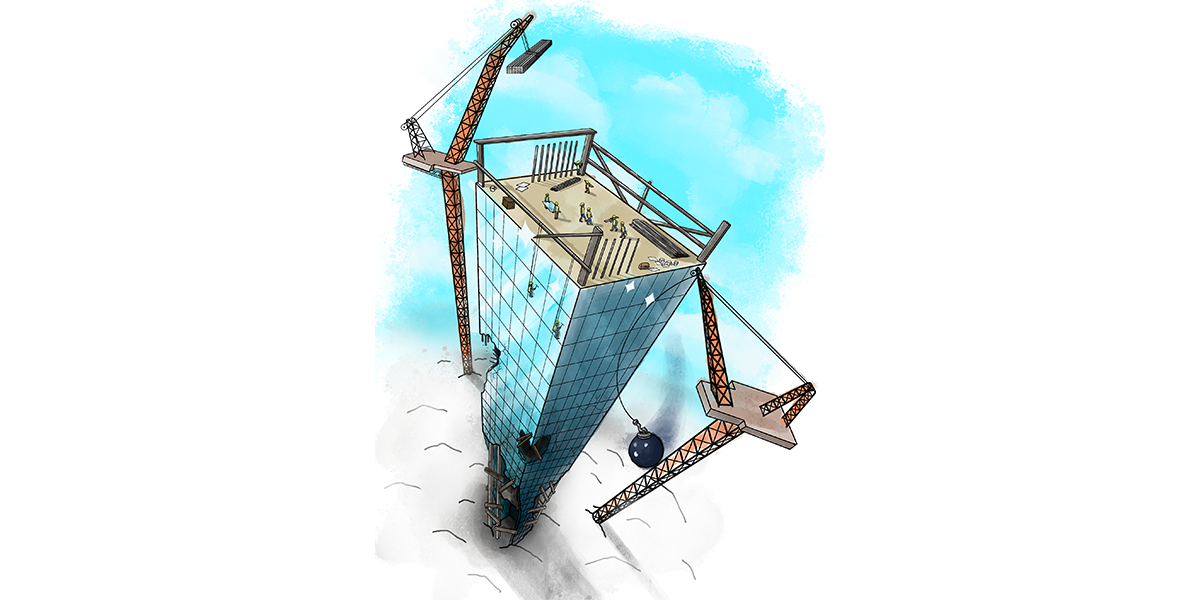
Cover Art Credit: Colin Bridges ’26, Washington and Lee University
- About the Mudd Center
- People
- Programs and Events
- Leadership Lab
-
Mudd Undergraduate Journal of Ethics
-
Volume 11: Spring 2026
- Editorial Board
- Letter from the Editor
- Journal AI Policy
- Cover Art Statement
- Do the environmental costs of AI data centers justify construction moratoria?
- Holistic Affirmative Action
- Fair Allocation of Scarce Resources in a Pandemic: Benefit, Reciprocity, Equality, and the Limits of Brudney’s “Principle”
- Just Around the Mountain Bend
- How Old I Have Become
- Leadership Lab with Mike Luttig and Lewis Powell III "When Morals Breach Party Lines"
- Leadership Lab with Jeffrey Goldberg "When Trust Isn’t Enough"
- Daphne Miller "A More Modest Proposal (Plant Based)"
- Volume 10: Spring 2025
- Volume 9: Spring 2024
- Volume 8: Spring 2023
- Volume 7: Spring 2022
- Volume 6: Spring 2021
- Volume 5: Spring 2020
- Volume 4: Spring 2019
- Volume 3: Spring 2018
- Volume 2: Spring 2017
- Volume 1: Spring 2016
-
Volume 11: Spring 2026
- Annual Reports
- Mudd Center Fellows Program
- Get Involved
Jonathan Swift’s A Modest Proposal (1729) represents a literary pinnacle of human satire.Writing to protest England’s neglectful treatment of poor Irish citizens, Swift prescribes the“perfect” economic and social cure: Irish citizens in poverty should sell their kids to the wealthy English as a food source and, by doing so, gain a source of meaningful income. The ethical and philosophical dilemmas tied to this “modest” proposal are obvious. Swift is simply attempting to draw attention to the daily food and money desert that Irish citizens affront with an argument that is completely sarcastic and yet will still, he hopes, make an impression on the reader.
Today I bring to light another food desert we face that, while maybe not as severe as the famine inflicted upon the Irish, still causes suffering and poverty in our own communities: malnutrition and small farm bankruptcy due to lack of seed diversity. However, unlike the satire of Swift’s decidedly immodest proposal—one that is clearly not meant to be followed and that highlighted a human-made famine—I would like to point the reader toward a more reasonable proposal from Dr. Daphne Miller, a Brown and Harvard-trained physician. Miller offers us an actually modest proposal for our own time, namely to provide methods and strategies we can utilize as individuals and as a society to tackle this lack of seed diversity, which is causing agricultural communities to both literally and figuratively choke on dust. This, too, is a crisis of our own doing.
In her Roger Mudd Center for Ethics Lecture on March 19, 2026, Dr. Daphne Miller warns her Washington and Lee University and Lexington community audience that most seed production in the United States is owned by a handful of wealthy and enormous national enterprises: Bayer, Corteva, Syngenta, and BASF. She also explains that the seeds these large corporations produce, known as F1 seeds, are the equivalent of the industrial-raised cow, made to grow fast, big, and die quickly. Furthermore, Dr. Miller reminds her audience that knowledge of where our food comes from (specifically the seeds) is quite the less well-known fact for the average American. Her exposé of the seed production monopoly is crucial information because genetically modified perks come with a serious downside: these super seeds lack the genetic diversity that creates the minerals and vitamins we want and need in our fruits and vegetables.
To combat this dearth of important nutrients and to save our health, Dr. Miller proposes afull-scale diversity revamp of the United States’ agricultural and ecological systems. She advocates for smaller, local farm ownership to keep soil microbiomes intact and natural as small farms are less likely to abuse the soil by mass-growing only one specific crop. Instead, Dr. Miller points out that local farmers often grow many kinds of crops throughout the year in one patch of soil, promoting that soil’s microbes’ health which in turn helps the crops to grow not only better but also healthier: in her talk, Dr. Miller showcased research which proved that crops grown in soil with more diverse microbiomes had elevated levels of nutrients compared to crops grown in soil that was either organically or chemically destined for only one species of crop. In addition, Dr. Miller advocated for more natural seed production and year-round, natural full use of resources such as water and compost. In essence, Dr. Miller gives scientific logic and power behind the argument of healthier, diverse food on all fronts. And, more importantly, stresses that an individual and community level commitment will make us not only healthier but also happier: empirical research shows immune system and mood boosting for those who plant, harvest, and/or consume diverse food varieties as opposed to mass market produced foods from F1 seeds.
Just as Swift’s 16th -century audience for A Modest Proposal needed to be literate and probably educated to grasp the full breadth of his consuming-babies satire, so too might Dr. Miller’s argument about our need to consume diverse, original seeds fall on deaf ears without more widespread exposure of her health-circle approach. Dr. Miller’s health-circle approach is her win-win strategy that she has put into practice in her local California community. The goal: more meaningful integration of farms into communities to keep money circulating in poorer, agricultural societies. Her health-circle approach is where local communities within a two-mile radius adopt growing, selling, consuming, and supporting local crop production and consumption to encourage seed diversity, a diversity that will lead to better soil health but also decreased asthma, reduced farming injury, less mental depression, and improved immune function. Likewise, supporting local crops, Dr. Miller argues, is a sure-fire way to keep money in poorer farm communities, where it rightfully belongs and where it will do the most good by building up local infrastructure. It falls to us as fortunate, listening audience members to heed Dr. Miller’s pleas to diversify our world, promote better health, and strengthen our neighboring communities.
Bibliography
Swift, Jonathan. A Modest Proposal. New York, NY: Spark Publishing, 2014.
The views, opinions, and conclusions expressed in student‑authored works published [in this journal / on this website] are those of their respective authors and do not necessarily reflect the official policy, position, or views of Washington and Lee University or the Mudd Center or its administrators, faculty, or staff.
- About the Mudd Center
- People
- Programs and Events
- Leadership Lab
-
Mudd Undergraduate Journal of Ethics
-
Volume 11: Spring 2026
- Editorial Board
- Letter from the Editor
- Journal AI Policy
- Cover Art Statement
- Do the environmental costs of AI data centers justify construction moratoria?
- Holistic Affirmative Action
- Fair Allocation of Scarce Resources in a Pandemic: Benefit, Reciprocity, Equality, and the Limits of Brudney’s “Principle”
- Just Around the Mountain Bend
- How Old I Have Become
- Leadership Lab with Mike Luttig and Lewis Powell III "When Morals Breach Party Lines"
- Leadership Lab with Jeffrey Goldberg "When Trust Isn’t Enough"
- Daphne Miller "A More Modest Proposal (Plant Based)"
- Volume 10: Spring 2025
- Volume 9: Spring 2024
- Volume 8: Spring 2023
- Volume 7: Spring 2022
- Volume 6: Spring 2021
- Volume 5: Spring 2020
- Volume 4: Spring 2019
- Volume 3: Spring 2018
- Volume 2: Spring 2017
- Volume 1: Spring 2016
-
Volume 11: Spring 2026
- Annual Reports
- Mudd Center Fellows Program
- Get Involved
The Mudd Center
-
Washington and Lee University
209 Mattingly House
Lexington, VA 24450