
AIM Program
(Advanced Immersion and Mentoring)
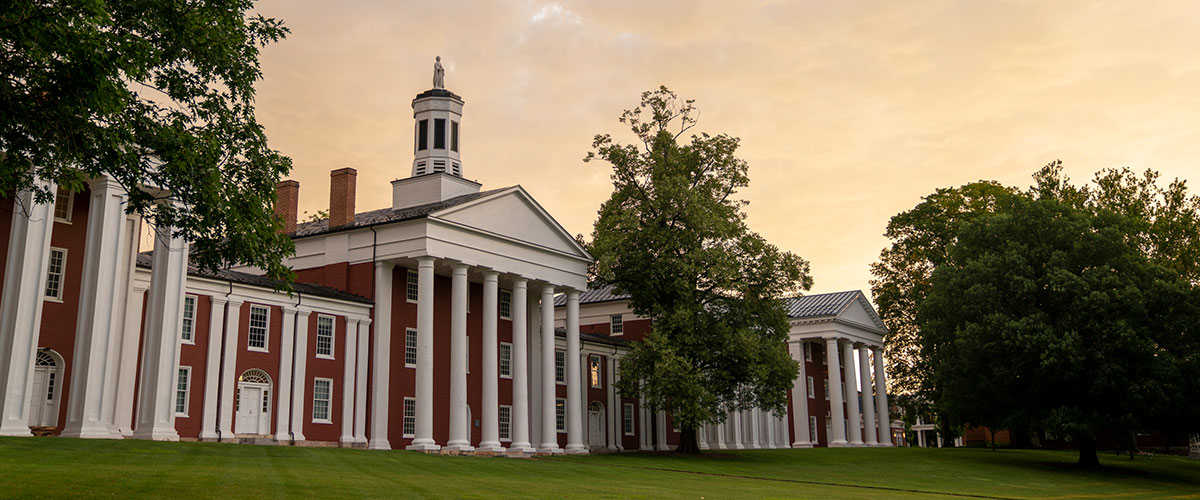
The mission of the Advanced Immersion and Mentoring (AIM) initiative is to instill an increased sense of confidence and belonging within incoming first-year students through immersive research and programming with W&L faculty and staff. The program offers residential and virtual opportunities.
2026 AIM Details
The AIM Scholars Summer Program will be delivered in two formats in the summer of 2026.
- Residential Program
- The residential five-week experience will run from Sunday, June 14, to Saturday, July 18.
- Early Move-In: Sunday, August 23.
- Stipend Amount: $2,000.00
- Eligibility Requirements: Scholars must be legally authorized to work in the United States during the program dates to be eligible. If you will have a F1 or J1 student work visa, you will mostly likely not be eligible for the Residential Experience.
- Virtual Program
- The virtual one-week experience will run from Monday, July 20, to Friday, July 24.
- Early Move-In: Thursday, August 20.
- Stipend Amount: $400.00
- Eligibility Requirements: N/A
The priority application deadline for both experiences is set on Sunday, April 12 at midnight. The final deadline to apply for both experiences is Sunday, April 19 at midnight. Applicants have until May 1 to submit their deposits.
Both formats will include a variety of sessions to address academic opportunities and resources, exercises in leadership development, and tips and tools to support an increased sense of belonging and overall well-being at W&L.
Those who are selected to participate in the residential five-week experience will also have the opportunity to work with faculty and peer mentors in active and ongoing research or collaborate on an exciting new project in a specific liberal arts discipline. Moreover, those who are selected to participate in the virtual experience will have the opportunity to move to campus early for additional programming, as well as to meet and greet with various faculty and staff members. Residential Scholars will also be invited back to campus early to meet and mingle with the Virtual Scholars.
To be eligible to apply for and participate in the residential AIM program, scholars must be legally authorized to work in the United States during the program dates to be eligible. If you will have a F1 or J1 student work visa, you will mostly likely not be eligible for the Residential Experience.
These eligibility requirements exist because residential AIM participants are hired as summer research and immersion student workers (or employees). If you have questions about your eligibility to apply to the program, please email studentemployment@wlu.edu.
Please note that any incoming first-year student is eligible to apply for and participate in the virtual experience of AIM. An example of a previous virtual schedule is shown in the “Virtual Experience” section below for students in different time zones.
Personal and Professional Development
Both the residential and virtual experiences offer personal and professional development opportunities, which are designed to engage scholars across the community, offer intentional leadership development, and expose scholars to available resources. These sessions include the following:
| Topic | Description |
|---|---|
| Community & Engagement | AIM Scholars participate in introductory discussions about campus resources and involvement, team building, and volunteerism. Scholars engage with campus professionals and student leaders in areas across student life, including Student Engagement and Leadership, Fraternity & Sorority Life, First-Year Experience, and Residential Life. |
| Leadership Education | AIM Scholars complete the CliftonStrengths assessment to identify their unique strengths, and how to meet optimal performance through intentional application of their strengths. AIM Scholars will also engage in a My Values inventory and conversation, as well as learn the importance of mentorship and how to identify potential mentors. This module also lays the groundwork for scholars to consider taking on leadership roles during their second year at W&L, part of the second learning objective of the AIM initiative. |
| Career and Professional Development | AIM Scholars learn how to navigate online career resources, including Handshake - an online career development tool. Exposure to the Career and Professional Development Office provides scholars with an opportunity to increase self-awareness and make contacts for related questions when they come to campus as W&L students. |
| Tips for College Success | AIM Scholars understand what to expect in the fall term. We promote a liberal arts approach to learning and focus on topics such as first-year seminars, writing in the curriculum, foundation requirements, etc. We introduce students to campus resources, including the Harte Center, which houses Peer Tutoring, Academic Coaching, the Writing Center, and Fellowships Office, Center for International Education, Leyburn Library, and more. These discussions help students to understand the role of such components in building critical thinking skills, gaining a more diverse educational perspective, and exposing them to curricular opportunities that they may not have experienced in high school. |
Residential Experience
Watch a short video about the Residential Experience:
Available Academic Immersion Projects
As part of the residential experience, AIM Scholars will participate in active or ongoing research or collaborate on a new project within a specific liberal arts discipline. 2026 projects are listed below.
| Academic Immersion Project/Focus | Faculty Mentor(s) | Description |
|---|---|---|
| Mitochondrial Genetics of Virginia’s Freshwater Crayfish | Paul Cabe |
Freshwater crayfish are ecologically important species found on nearly all continents. The world hotspot of species diversity is in SE North America. Although hundreds of species are known, many species remain to be described scientifically, hindering research and preventing effective conservation efforts. My lab works to survey, identify and classify Virginia crayfish populations using genetic tools; this includes contributing to efforts to describe new species. We produce and use DNA sequence data, primarily from the mitochondrial genome. Students will experience field work, and learn common DNA techniques like DNA extraction, PCR, gels, DNA sequencing and DNA sequence analysis. |
|
What Does that Gene Do? Using Genetics and Bioinformatics to Reveal the Function of an Uncharacterized Gene in the Yeast Saccharomyces Cerevisiae |
Leah Lanier |
Despite the vast amount of knowledge that has recently come about due to advances in DNA sequencing and other genetic techniques, there are still genes whose functions remain uncharacterized. Dr. Whitworth’s lab has begun bioinformatics work on one such gene in the yeast Saccharomyces cerevisiae, a eukaryotic microbe that closely models human cells. This summer our goal is to work towards characterizing the cellular function of this gene through genetic tools including a synthetic-lethal screen. Students will learn techniques including microbiological culturing of yeast and bacteria, PCR, and cloning. |
| Developing Safer Therapeutics | Sarah Kim |
Dr. Kim’s lab focuses on developing safer and more effective chemotherapeutics for children with brain cancer. You may have heard about how chemotherapeutics can cause side effects such as hair loss, nausea, and vomiting. These side effects are more severe when given to children, who may experience lifelong hearing loss, vision loss, or learning disabilities. Scholars will learn about current challenges and promising new therapies for treating children with brain tumors. In the lab, scholars will learn to prepare therapeutics. |
| Tracing the Gender-Neutral X in Argentine Media | Romina Green |
This project is a continuation of SRS projects from 2023 and 2024, using digital humanities tools to trace the emergence and evolution of the gender-neutral “x” in Argentina from 2003 to 2005. This project has now entered its second phase, examining the shift by online communities from using the “x” to the “e” and “i". Researchers will attend workshops on how to approach researching and archiving a social media site. They will be assigned texts on historical approaches to digital archives and that cover the historical background of the research topic. Students interested in this project should feel comfortable reading and speaking in Spanish. |
| Analyzing Single-cell RNA Sequencing Data for Transposable Element Expression | Kyle Friend |
Transposable element (TE) expression is linked to human aging and oncogenesis. We are currently analyzing human single-cell RNA sequencing data to identify tissues and cell types that are more prone to TE-mediated damage. Lab research will focus on a combination of bioinformatics and experimental work. Experimental work will include human cell tissue culture and standard RNA molecular biology workflows. Bioinformatics will involve writing scripts in R and Python and working with large datasets. Over the course of the AIM Scholars Simmer program, we will also read some primary scientific literature in addition to these research skills. |
| Building an Automated Polarized Light Microscope for Rock Crystallographic Texture Analysis | Mengying Liu |
This project aims to build a customized polarized light microscope system for automated rock texture analysis, advancing beyond traditional methods that are either labor-intensive (U-stage microscopy) or time-consuming (EBSD). An AIM Scholar(s) will get to design and build an automated system that rotates and tilts rock samples while precisely controlling special light filters. When polarized light hits crystal structures, they create unique “light fingerprints” that change as we rotate them—like a disco ball! The mission: create the motors, circuits, and computer programs that capture these patterns automatically. This is hands-on engineering at its coolest—you will 3D design custom parts, solder circuits, write code to control motors, and align optical systems. By summer’s end, an AIM Scholar(s) will have built a working prototype that turns a process that usually takes scientists days into something that happens in minutes. |
| Scouting for Sierpiński and Rummaging for Riesel | Carrie Finch-Smith |
My favorite number is 509203; it’s the smallest known Riesel number. Riesel numbers are found in many other integer sequences, such as the Fibonacci numbers, the sequence of triangular numbers, the set of Ruth-Aaron pairs, and many others. My research group looks for new results in the intersection of interesting integer sequences and the set of Riesel numbers and Sierpiński numbers. An AIM scholar(s) would join in on an existing quest for Riesel or Sierpiński numbers in a sequence that SRS students are already exploring, or they may venture out to look for these special numbers in a sequence that they have chosen. |
| Leadership and Sustainability Performance: Evidence from CEO Turnover | Megan Hess | This research project will leverage data about leader retirements and dismissals to explore the effect that leadership changes have on sustainability performance indicators including ESG scores and sustainability goals. In addition to the negative effect of turnover on social performance shown in my preliminary analysis, I want to use qualitative methods like a textual analysis of the letters from the Chief Executive Officer (CEO) in sustainability reports before and after the CEO change to unpack how leadership impacts sustainability. AIM Scholar(s) will be introduced to research methods used in the social sciences to study important business activities, namely how leadership style affects corporate performance in the domain of sustainability. |
| Virginia Terroir and Wine Chemistry | Connell Cunningham | This project explores how Virginia’s unique terroir, including its climate, soils, and vineyard practices, shapes the chemical composition of regional wines. Students will analyze key components such as sugars, organic acids, tannins, phenolics, and aroma-active compounds using Gas Chromatography Mass Spectrometry (GCMS), Nuclear Magnetic Resonance (NMR) spectroscopy, and various wet-chemical methods. Students will gain hands-on experience with sample preparation, derivatization, quantitative analysis, and the interpretation of real analytical data. The work connects directly to questions faced by local vineyards and contributes to a growing scientific understanding of Virginia wine chemistry. |
| Reconstructing the Thermal History of Rocks using Raman Spectroscopy | Jeffrey Rahl | Mountain building processes bury rocks deep in the Earth where they experience elevated pressures and temperatures. If scientists can estimate the temperature history of rocks now exposed at the surface, they can use this information to learn about how mountains form and the geologic history of particular regions. An exciting approach to estimating the temperature history of rocks uses a cutting-edge tool called Raman Spectroscopy, which provides information about the atomic structure of materials. Because heat progressively transforms organic molecules common in sediments into the mineral graphite, the Raman spectra of carbon-rich material can be used to reconstruct the maximum temperature experienced by rocks. This summer, we will use W&L’s brand new Raman Spectrometer to investigate the temperature history of the Appalachians near Lexington. |
| Digital Approaches to W&L History | Mackenzie Brooks | Leyburn Library seeks students interested in institutional history research opportunities for the summer of 2026. Working collaboratively, the Library and W&L students have been building research portals and digital exhibits on major themes in the history of W&L, including slavery, co-education, and early Scots-Irish founders. This work involves digging into archival material in Special Collections and Archives, processing it to make it available digitally, and interpreting the material for a public audience. An AIM Scholar(s) will gain experience in library and archival research skills, specifically transcription, digitization, metadata, digital exhibit creation, digital scholarship, and public history. Students interested in careers in libraries/information science, cultural heritage, public history, museums, education, or creative fields are encouraged to apply. |
| Enslavement at Liberty Hall: Uncovering the Archaeology and Forgotten History of W&L’s Iconic Back Campus | Donald Gaylord | During the summer of 2026, Professor Gaylord will continue his research at Liberty Hall, the location of the iconic 18th-century campus of our predecessor institution, Liberty Hall Academy. In the 1970s, Professor John McDaniel and roughly a decade of W&L students excavated here, focusing largely on the academic period of the site’s occupation (1782-1803). Professor Gaylord’s research has shown that after the Liberty Hall Academy House burned down in January 1803, the two subsequent landowners held roughly one hundred African Americans in bondage at Liberty Hall as the labor force for agriculture and light industry over the years between 1803 and the American Civil War. Our work this summer will focus on excavation in the yard spaces around the Foundation at Liberty Hall—Liberty Hall Structure 9—the academy’s Steward’s House/Dining Hall, which later served as the center of enslaved life at Liberty Hall Plantation. Enslaved people lived here, but they also likely operated a forge, cooked and ate, performed washerwoman and seamstress work, and operated one of the earliest African American schoolhouses in the Valley of Virginia. Additionally, we will concentrate on artifact processing and analysis in trying to understand what life was like for the people held in bondage at Liberty Hall. We will excavate while the weather allows, we will process and analyze the sediments and artifacts when the weather keeps us indoors, and we will visit archives in Rockbridge and Augusta County that hold many of the documents related to Liberty Hall. |
| The Effects of Estrogen and Obesity on Rat Activity Patterns |
Sarah Blythe | During Summer 2026, the Blythe lab will be investigating how changes in estrogen (such as those occurring during menopause) influence behavior using a rat obesity model. An AIM Scholar(s) will receive training on how to create ethograms and analyze behavioral data. Depending on project progress and student interest, opportunities may also include tissue sectioning, immunocytochemistry, and histological imaging and analysis. This experience is ideal for students interested in neuroscience, behavior, endocrinology, or biomedical research. |
| Social Media, Current Events and Issues | Toni Locy | This project will examine how rural American high school students interpret the use of social media, primarily TikTok, by legacy news organizations. Because of economic pressures to increase subscribers and advertisers, TikTok has become a means for news organizations to try to reach young people where they are by adapting news to short audiovisual clips. The project seeks to better understand how rural high school seniors or community college students perceive such overtures as they navigate a torrent of information, misinformation and disinformation and they try to make sense of the world. |
Please note the following:
- More academic/research opportunities may arise for the 2026 summer and will thus not be listed on our website nor application. Therefore, we ask applicants to be ready to share a general statement on their academic/research interests.
- If you have questions about any of the specific academic immersion projects listed above, please contact the appropriate faculty member directly.
Other Experiential Learning Opportunities
AIM Scholars participating in the residential experience also participate in the following opportunities:
- Engagement in service with The Campus Kitchen at Washington and Lee (CKWL).
- Introduction to and engagement with the Integrative and Quantitative (IQ) Center. With help from faculty and institutional technology support staff, AIM Scholars complete a self-selected project using IQ Center technology and present their work at the end of the AIM experience. This project mimics a portion of a typical college course.
- Work on a personal reflection, addressing the value of the AIM summer experience and how it translates into their college years. Scholars present their personal reflections to members of the AIM Scholars Summer Program Leadership Team and faculty mentors at the end of the five weeks, alongside an overview of each scholar’s academic work and their experiences working in their teams.
Virtual Experience
Faculty Panels
As part of their virtual experience, AIM Scholars attend and engage in panels comprised of faculty members who represent opportunities available in the liberal arts curriculum. Below are examples of previous panels and faculty presenters:
| Faculty Presenters | Academic Discipline/Topic |
|---|---|
| Jenefer Davies, Andrea Lepage, Stephanie Sandberg, Chris Dobbins, Elliott King | The Arts - Dance, Theater, Art History |
| Melissa Vise, Diego Millan, Genelle Gertz, Lubadah Chowdhury, Nneka Dennie | English and History |
| Nadia Ayoub, Irina Mazilu, Jon Erickson, Carrie Finch-Smith, Kyle Friend, Gregg Whitworth, Sarah Blythe | STEM Fields - Biology, Neuroscience, Physics, Engineering, Mathematics, Chemistry, Biochemistry, Health Professions |
| Donald Gaylord, Brian Alexander, Art Goldsmith, Marcos Perez | Social Sciences - Anthropology, Politics, Economics |
| Karla Murdock, Holly Shablack, Wythe Whiting | Cognitive and Behavioral Science |
| Joey Smith, Pooja Thakur-Wernz, Elisabeth Gilbert, Ehi Rajsky | Business and Economics |
| Gregg Whitworth, Natalia Toporikova, Bright Frimpong | Data Science |
| Mark Coddington, Kevin Finch, Toni Locy | Journalism and Strategic Communications |
| Eric Moffa, Haley Sigler | Teaching and Education |
| Alexander Sutton, Fran Elrod, Bethany Ozorak, Alessandra Del Conte Dickovick | Community-Based Learning and Poverty Studies |
Note: Academic topics and presenters are subject to change for the 2026 AIM Scholars Summer virtual experience.
Watch a short video about the Virtual Experience:
Sample Virtual Schedule
| Time (Eastern) | Mon. | Tue. | Wed. | Thurs | Fri. |
| 11:00 a.m. - 12:30 p.m. | x | x | Leadership Development: Defining Mentorship | Student Leadership Panel | x |
| 1:00 - 2:30 p.m. | Introduction and Team-Building | Leadership Development: Clifton Strengths | Simulated Class | x | Introduction to Career and Professional Development |
| 3:00 - 4:30 p.m. | Student Engagement Panel | Faculty Panels | Faculty Panels | Faculty Panels | Program Wrap-Up |
| 5:00 - 6:30 p.m. | x | Introduction to the Office of Student Engagement and Leadership | x | x | x |
| 7:00 - 8:00 p.m. | x | x | x | x | x |
| Times TBA | Programming with PA’s | Programming with PA’s | x | x | x |
Note: This is only one sample cohort schedule from a previous AIM Scholars Summer virtual experience. Another cohort schedule may include more programs in the 7:00pm-8:30pm time bracket. Moreover, schedules are subject to change for the 2026 virtual AIM Scholars Summer program.
Other Expectations
As a reminder, AIM Scholars who are selected to participate in the virtual experience are expected to move into their residence hall on the morning of Thursday, August 20, 2026. The purpose of an early move-in is for students to engage in follow-up sessions from their virtual experience, connect with their fellow scholars and W&L faculty and staff, and get a head start on familiarizing themselves with campus and other resources.
AIM Scholars who are selected to participate in the residential experience are expected to move into their residence hall on the morning of Sunday, August 23, 2026. The purpose of an early move-in is for all AIM Scholars from both experiences to come together to expand upon and further cultivate the AIM Community.
Moreover, if selected to participate in either experience of the AIM Scholars Summer Program, students will be expected to enroll in FYE-100: General Success. An additional benefit to participating in the AIM Scholars Summer Program is that all AIM Scholars will work with the Dean of AIM Scholars for all four years of their undergraduate experience.
If you have questions about which experience to pursue, or other general questions, please contact Assistant Dean of Student Leadership Leah Beard. We look forward to receiving your application!
Leslie Wingard Cunningham
Associate Provost for Faculty Development
Professor of English and Africana Studies