
Niloofar Gholamrezai
Niloofar Gholamrezaei is a visual artist and interdisciplinary art scholar with a foundation in modern and contemporary art history and aesthetic theories.
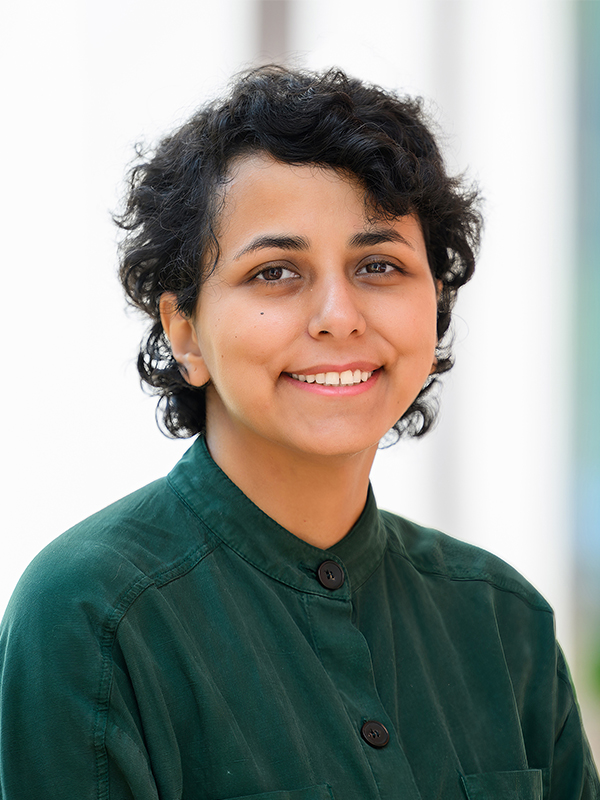
Niloofar Gholamrezai
Visiting Assistant Professor of Art
- Wilson Hall 2012
- P: 540-458-8861
- E: ngholamrezaei@wlu.edu
Program Affiliations
Education
- PhD in Fine Arts from Texas Tech University
- MFA in Painting from the Pennsylvania Academy of the Fine Arts
- BA in Painting from Tehran University of Art
Teaching
Gholamrezaei has broad teaching experience in studio art, art history and interdisciplinary humanities.
Research and Studio Practice
Gholamrezaei’s work explores theoretical and phenomenological notions of the subject, human agency, and historical consciousness within the context of global modernity and modernisms. Her research interest is influenced by the complex question of modernity and modernisms in the Iranian intellectual discourse since the late nineteenth century. As a scholar, Gholamrezaei has also studied how technological disruptions shape human subjectivity, representation, and agency within global modernity and modernisms. Her most recent research examines the impact of AI in art and art education, engaging with ontological questions in aesthetics, issues of agency, and intentionality. She examines the concepts of subjectivity, historical consciousness, and human agency by revisiting humanistic and Enlightenment ideas in both Iranian and Western intellectual discourse.
Her studio practice examines subjective experience as a space where representation, memory, and language intersect. Drawing on sources such as Persian literature, she reinterprets historical cultural motifs to address modern socio‑political and cultural conditions. She is interested in the temporality of historical motifs, how they persist or evolve, and how they can be complicated to reveal new forms of subjective consciousness. Her current series, Twilight, reimagines the Persian Epic of Shāhnāmeh story of Rostam and Esfandiyār by shifting the motif of heroism in the poetry to the protagonist’s inner ethical struggle, having to choose between an unjust peace or a tragic war. The series reflects a new form of heroism in the Iranian modern sense of self rooted in contemplation, cultural introspection, questing, and navigating ambiguity, what she frames as a “twilight” space of uncertainty, moral complexity and paradoxes.